
When shipping from China to the United States, inaccurate declarations, missing documents, or product compliance issues can lead to customs reviews, additional costs, and delays. Working with an experienced logistics provider and an authorized U.S. customs broker can help importers coordinate the process.
U.S. Customs and Border Protection (CBP) uses risk-based screening. Not every shipment is physically inspected, but importers should ensure that shipment details and supporting documents are accurate before cargo departs.
Common Reasons for U.S. Customs Delays
1. Incorrect Customs Value or Product Classification
Declared values and product classifications must accurately reflect the transaction and the goods. CBP may review invoices, payment records, product details, and other supporting information.
- Declare the actual transaction value under applicable customs valuation rules.
- Use an appropriate Harmonized Tariff Schedule (HTS) classification.
- Keep purchase orders, invoices, and payment records available.
2. Intellectual Property Concerns
Counterfeit goods and products that infringe trademarks, copyrights, or patents may be detained or seized. Check product designs, logos, packaging, and authorization documents before shipping branded goods.
3. Missing Product Compliance Documents
Some products require additional permits, testing, certificates, labeling, or review by relevant U.S. agencies. Requirements vary by product. For example, certain electronics may be subject to FCC requirements, while food and agricultural products may involve FDA or USDA rules.
Confirm the requirements for the specific product before booking transportation. Do not assume that the same documents apply to every shipment in a category.
Documents Commonly Needed for U.S. Customs Clearance
- Commercial invoice with accurate transaction and product details.
- Packing list showing quantities and packaging information.
- Bill of lading or air waybill.
- Country-of-origin information.
- Applicable permits, licenses, certificates, or other product-specific documents.
How the U.S. Customs Clearance Process Works
1. Prepare shipment information
Confirm the product description, value, quantity, origin, and applicable classification. Organize the required shipping and compliance documents.
2. Arrange customs entry
The importer or its authorized customs broker submits the required entry information through the appropriate CBP systems.
3. Respond to any examination
CBP may review documents, conduct an X-ray or other non-intrusive inspection, or carry out a physical examination. The method and timing depend on the shipment.
4. Arrange cargo release and delivery
After customs requirements are satisfied and the cargo is released, coordinate port pickup, transportation, warehouse receiving, or final-mile delivery.

Customs Broker vs. Freight Forwarder
| Service Provider | Main Responsibility |
| U.S. customs broker | Handles customs entry under the required authorization; may coordinate entry filing and tariff-related matters. |
| Freight forwarder | Arranges international transportation, bookings, and cargo coordination. |
| Integrated logistics provider | Coordinates multiple stages such as origin warehousing, transportation, customs clearance support, and overseas delivery. |
A freight forwarder is not automatically a licensed U.S. customs broker. Confirm which authorized broker will handle the customs entry for your shipment.
How NIUKU Supports China to USA Import Logistics
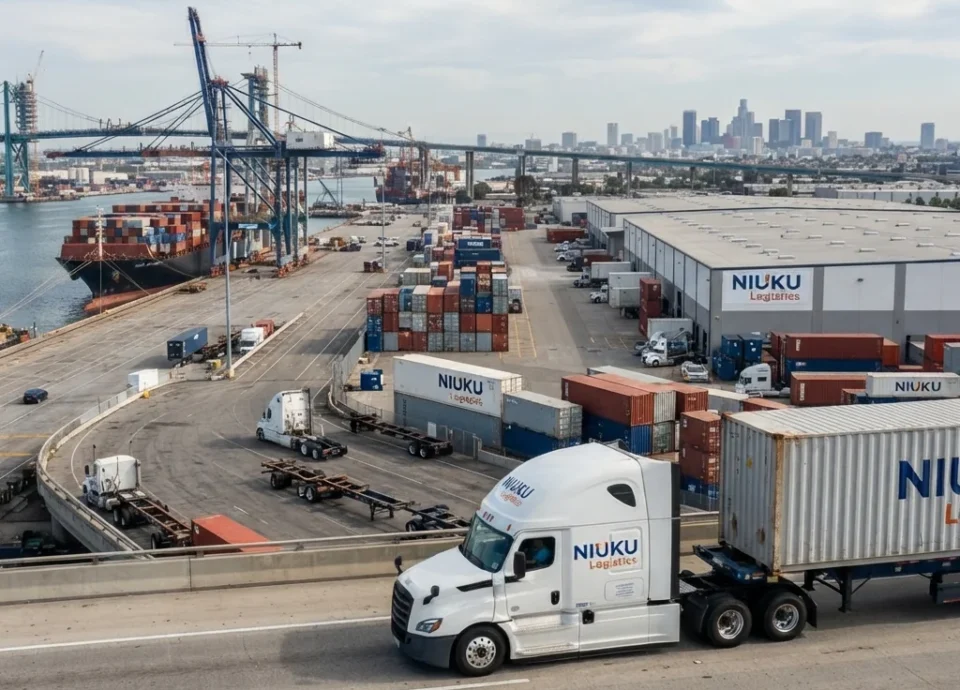
NIUKU International Logistics provides cross-border logistics solutions for businesses shipping from China to the United States, Canada, the UK, Europe, and Mexico. With more than 11 years of FBA logistics experience, NIUKU coordinates origin warehousing, international transportation, customs clearance support through appropriate service channels, overseas warehousing, and final-mile delivery.
- 25 domestic warehouse locations with more than 80,000 m² of warehouse space.
- 19 overseas warehouses with more than 2,200,000 sq. ft. of combined space.
- More than 150 self-operated trucks supporting U.S. domestic transportation.
- More than 1,200 employees supporting logistics operations.
- Platform relationships and qualifications including Amazon SEND, FIST Elite, SPN, TikTok Shop, Wayfair, Walmart, and TEMU.
U.S. Customs Preparation Checklist
- Confirm the actual product value and country of origin.
- Check the applicable HTS classification and import duties.
- Verify product-specific permits, testing, or certification requirements.
- Review intellectual property and authorization risks.
- Make sure the invoice and packing list match the actual cargo.
- Allow time for possible customs review or examination.
Frequently Asked Questions
Are all shipments from China physically inspected by U.S. Customs?
No. CBP uses risk-based screening. Some shipments receive document or electronic reviews, while others may be selected for X-ray or physical examination.
What documents are needed for customs clearance from China to the USA?
Common documents include a commercial invoice, packing list, bill of lading or air waybill, and country-of-origin information. Product-specific permits or certificates may also be required.
Can a freight forwarder handle U.S. customs clearance?
A freight forwarder can coordinate the process and work with an authorized U.S. customs broker. Confirm who is responsible for submitting the customs entry.
Plan Your Shipment from China to the United States
Contact NIUKU to discuss your cargo type, shipping requirements, customs documentation, and delivery destination. Our team can help coordinate transportation and customs clearance support through the appropriate service channels.