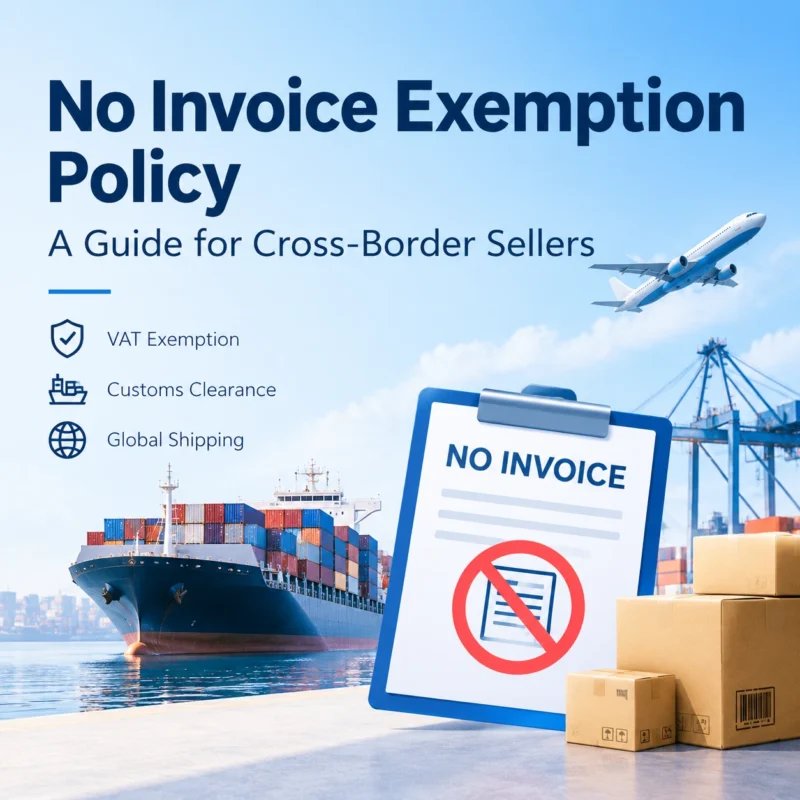
For cross-border eCommerce sellers sourcing products in China, obtaining a valid input VAT invoice is not always straightforward. Small manufacturers, wholesale markets and individual suppliers may be unable to provide the invoices normally used in a traditional export tax-refund process. In eligible cross-border eCommerce scenarios, China’s no-invoice export tax exemption can provide another compliance path.
The key point is that tax exemption and tax refund are not the same. Eligible exporters may be exempt from VAT on qualifying export sales, but they generally cannot claim an input VAT refund when the required purchase invoices are unavailable. Whether the model applies depends on the exporter’s registration, the customs declaration model, local implementation rules and the goods being exported.
What Is China’s No-Invoice Export Tax Exemption?
In practical terms, the policy is designed for qualifying cross-border eCommerce exports where the seller cannot obtain a compliant input VAT invoice for the purchased goods. The export may still qualify for VAT exemption if the applicable regulatory conditions are satisfied.
- No input VAT invoice: The seller does not hold a qualified purchase VAT invoice for the relevant goods.
- VAT exemption: Eligible export sales may be exempt from VAT under the applicable cross-border eCommerce rules.
- No input VAT refund: Without qualifying purchase invoices, the seller generally cannot claim the traditional input VAT refund associated with standard export tax-refund procedures.
This distinction matters for Amazon sellers, independent websites, marketplace merchants and other exporters because the tax treatment affects pricing, documentation and the choice of export model.
Who May Be Eligible?
Eligibility is not determined by the absence of an invoice alone. Businesses should confirm whether their operating structure and shipment model satisfy the local requirements that apply to the relevant cross-border eCommerce pilot zone and customs channel.
- Registration: The exporting business may need to be registered in an eligible cross-border eCommerce comprehensive pilot zone.
- Platform filing: Product and transaction information may need to be filed through the required local cross-border eCommerce service platform.
- Customs declaration model: Shipments may use approved cross-border eCommerce customs models such as 9610, 9710 or 9810, depending on the business scenario.
- Product compliance: Restricted, prohibited or specially regulated products may be subject to additional requirements or may not qualify.
- Data consistency: Transaction, payment, logistics and customs information should be complete and consistent.
No-Invoice Tax Exemption vs. Traditional Export Tax Refund
| Comparison | No-Invoice Tax Exemption | Traditional Export Tax Refund |
| Input VAT invoice | May not be required in eligible cases | Normally required for refundable input VAT |
| Main tax treatment | VAT exemption on qualifying export sales | Refund of eligible input VAT under applicable rules |
| Typical users | Cross-border eCommerce sellers without qualifying purchase invoices | Exporters with complete purchase and tax documentation |
| Documentation focus | Transaction, logistics, customs and platform records | Purchase invoices, customs and tax records |
How to Operate More Safely Under the Policy
- Confirm eligibility before shipment. Check the registration location, business model, product category and local implementation requirements.
- Choose the correct customs model. The declaration method should match the actual transaction and fulfillment model rather than being selected only for convenience.
- Prepare consistent records. Keep contracts, payment records, product information, shipping documents, warehouse records and customs data aligned.
- Check product-specific requirements. Batteries, chemicals, food, cosmetics, medical-related products and other regulated categories may require additional documents or approvals.
- Coordinate logistics and customs documentation early. Review shipment information before pickup instead of waiting until the cargo reaches the port or airport.
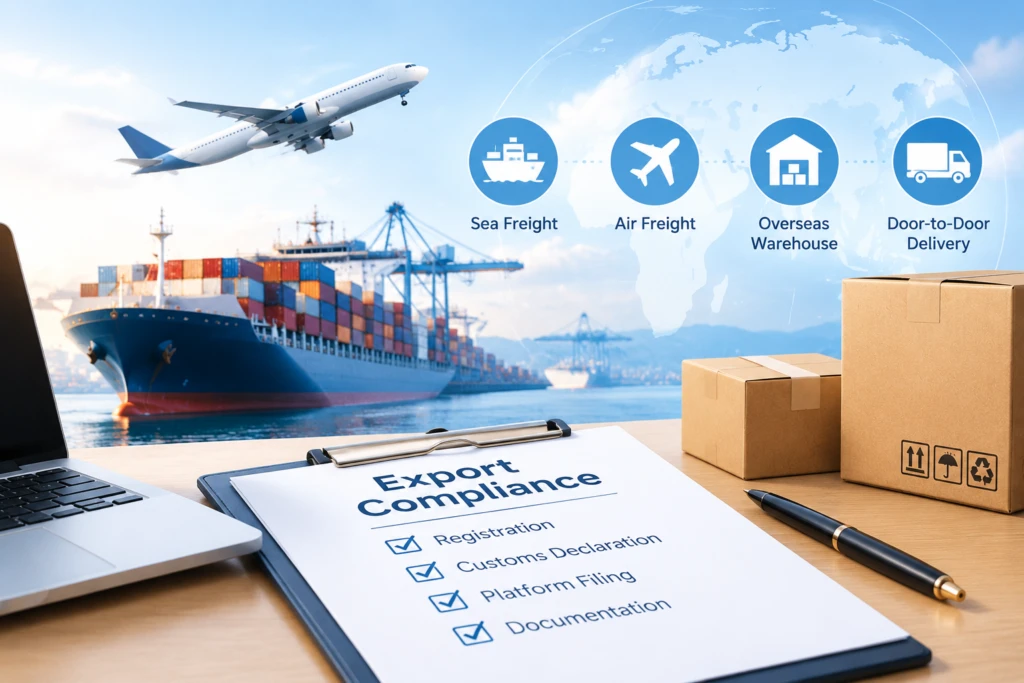
How a Logistics Provider Supports Compliant Cross-Border Exports
A logistics provider cannot replace tax or legal advisers, but it can help reduce operational errors by coordinating the physical shipment with the required customs and logistics documents.
- China pickup and domestic warehouse coordination
- Ocean freight and air freight
- FBA first-mile shipping
- Overseas warehousing and fulfillment
- Door-to-door DDU/DDP logistics where applicable
- Customs clearance coordination and last-mile delivery
- Shipment visibility through warehouse and transportation systems
According to the company information provided for this article, NIUKU operates 25 domestic warehouses and 19 overseas warehouses, with more than 2.2 million sq. ft. of overseas warehouse capacity. Its service network covers the United States, Canada, Mexico, the United Kingdom and Europe.
Why Compliance Still Matters After VAT Exemption
A VAT exemption does not eliminate other compliance responsibilities. Exporters may still need to consider corporate income tax, procurement records, product compliance, customs classification and the consistency of transaction data across platforms, logistics systems and regulatory filings.
For this reason, sellers should treat the no-invoice model as a regulated export arrangement rather than a shortcut around documentation. The safest workflow is to confirm the tax treatment with a qualified tax adviser and coordinate the logistics and customs process with experienced service providers before shipping.
FAQ
Can Amazon sellers use the no-invoice export tax exemption?
Potentially, yes. Eligibility depends on the seller’s business structure, registration, customs model, product category and local implementation requirements. Sellers should confirm the specific arrangement before applying it to shipments.
Is no-invoice tax exemption the same as an export tax refund?
No. Tax exemption and tax refund are different treatments. A no-invoice exemption may exempt qualifying export sales from VAT, while a traditional export tax refund generally requires qualifying purchase and tax documentation.
Can a logistics company determine whether my business qualifies?
A logistics provider can help coordinate export procedures and documentation, but tax eligibility should be confirmed with the relevant authorities or a qualified tax professional.
Conclusion
China’s no-invoice export tax exemption can be useful for eligible cross-border eCommerce businesses that cannot obtain qualifying input VAT invoices. The model still requires accurate registration, the correct customs channel, consistent records and product compliance. Planning these requirements before shipment helps reduce avoidable customs and tax risks.NIUKU supports China-origin cross-border shipments through FBA logistics, ocean and air freight, overseas warehousing and door-to-door delivery coordination. For businesses evaluating a China-to-overseas shipping plan, the logistics team can review cargo details and help coordinate the appropriate transport and customs workflow.