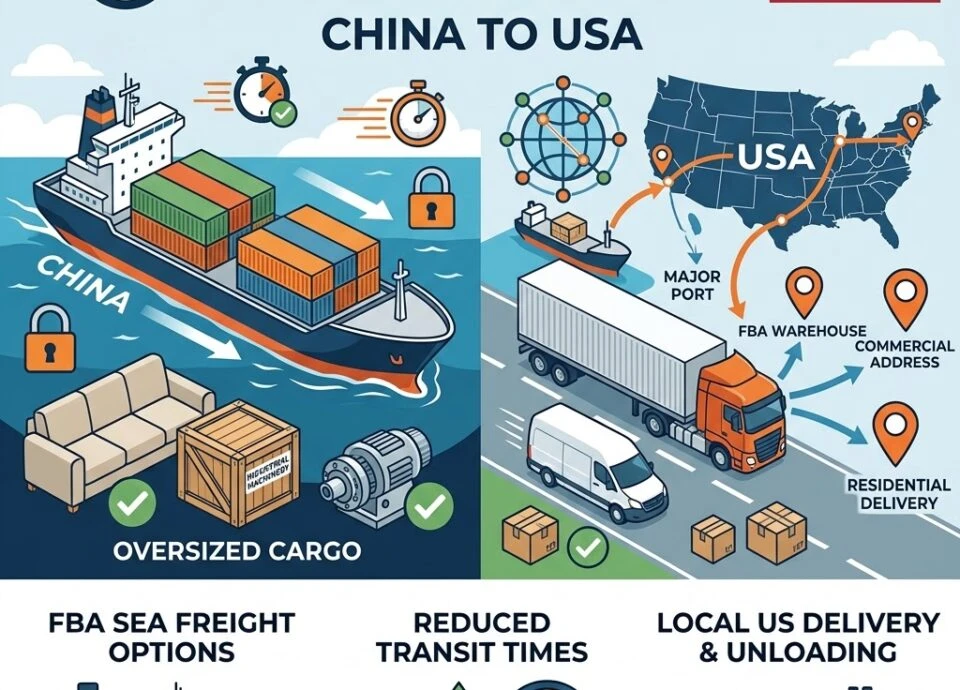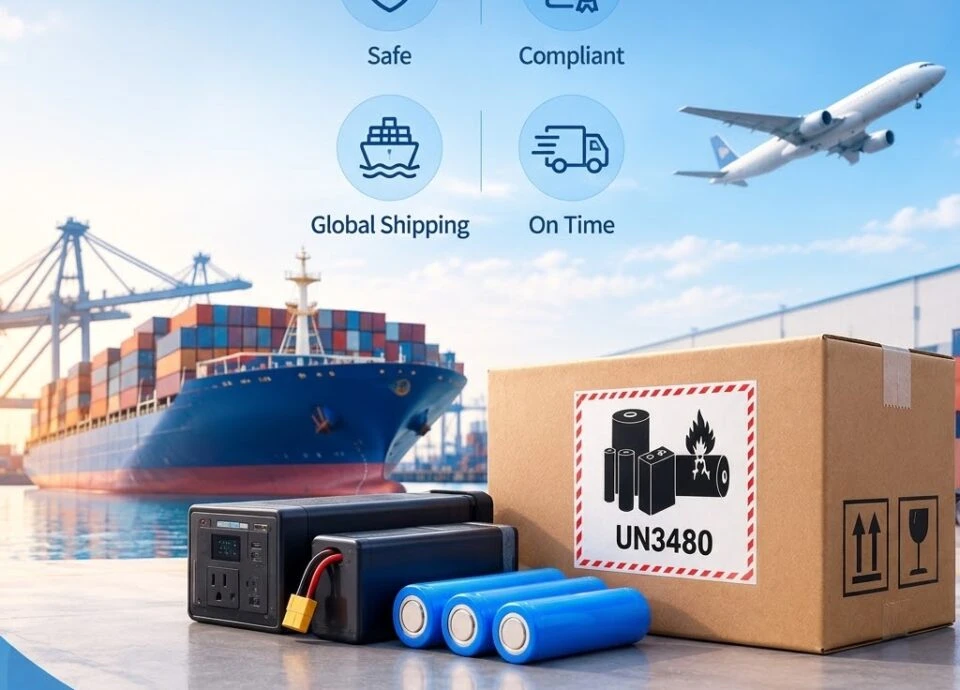
If you rely on Ocean Freight China to USA for automotive or motorcycle parts, transportation is only one part of the job. A shipment can face delays if the product falls under U.S. Federal Motor Vehicle Safety Standards (FMVSS), the documentation is incomplete, or the customs declaration does not match the cargo. For Chinese auto parts exporters, understanding DOT-related requirements before booking your vessel can reduce avoidable customs problems, storage charges, and delivery delays. This guide explains what you should check before shipping, how U.S. compliance works, and how NIUKU International Logistics can support your China-to-USA ocean freight process.
What Does DOT Compliance Mean for Auto Parts?
The U.S. Department of Transportation (DOT) oversees transportation safety, while the National Highway Traffic Safety Administration (NHTSA) administers FMVSS requirements for applicable motor vehicles and motor vehicle equipment.
Importantly, the U.S. system is based on manufacturer self-certification, rather than a government-issued “DOT certificate.” NHTSA states that it does not approve manufacturers or products in advance; manufacturers are responsible for determining and certifying compliance with applicable FMVSS requirements.
Depending on the product, relevant requirements may cover:
- Tires and tire-related equipment
- Lighting and reflective devices
- Brake hoses and brake-related equipment
- Automotive glazing
- Seat belt assemblies
- Motorcycle helmets
- Other motor vehicle equipment subject to specific FMVSS standards
You should identify the applicable FMVSS before production and shipment instead of assuming that every automotive accessory requires the same compliance process.
Ocean Freight China to USA: DOT vs. Customs Requirements
DOT/FMVS compliance and customs clearance are related but not identical. Your logistics provider can help coordinate documents and shipment execution, but the manufacturer remains responsible for product compliance.
| Area | What You Need to Check | Typical Risk |
|---|---|---|
| FMVSS | Identify applicable safety standard | Non-compliant product |
| Manufacturer | NHTSA manufacturer information where required | Regulatory issue |
| U.S. Agent | Foreign manufacturers may need a U.S. agent for service of process | Import complications |
| Product marking | Follow the applicable FMVSS marking requirements | Inspection or rejection |
| HS/HTS classification | Match the actual product and supporting documents | Customs delay |
| Ocean shipment | Commercial invoice, packing list, bill of lading and relevant filings | Clearance delay |
| ISF | Submit required ocean-import data on time | Customs penalty risk |
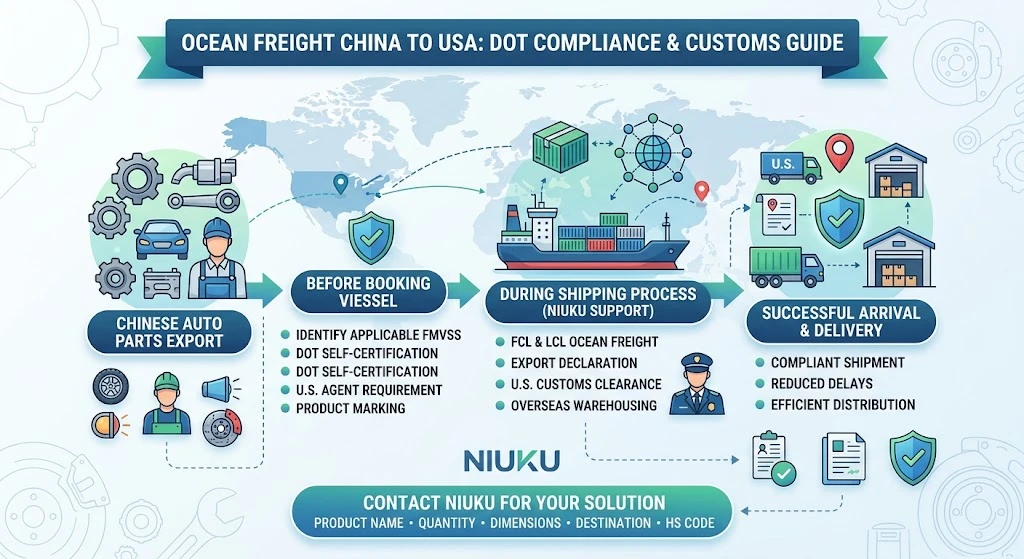
For foreign manufacturers of regulated motor vehicle equipment, NHTSA requires designation of a U.S. agent for service of process before offering the equipment for importation.
For ocean shipments, the Importer Security Filing (ISF) generally requires specified information no later than 24 hours before cargo is laden aboard a vessel destined for the United States.
How to Prepare Auto Parts for China-to-USA Shipping
Before you book FCL shipping China to USA for auto parts or LCL shipping China to USA for auto parts, follow this process:
- Identify the product category
Determine whether your product is a motor vehicle, motor vehicle equipment, or an item outside FMVSS scope. - Check the applicable FMVSS
Review the specific standard and technical requirements rather than relying only on a generic “DOT approved” statement. - Complete manufacturer compliance work
Maintain appropriate test records, certification information, product specifications, and supporting technical documents. - Check U.S. agent requirements
Foreign manufacturers subject to the relevant NHTSA rules should complete the required agent designation process. - Prepare customs documents
Make sure the commercial invoice, packing list, bill of lading, product description and tariff classification are consistent. - Review ISF and entry information
For ocean cargo, provide the required shipment data early enough for the importer or authorized filing party to meet the applicable deadline. - Archive compliance documents
Keep test records, certification information, product specifications and relevant import documents organized before the vessel departs.
Why Customs Preparation Matters for Automotive Parts
A common mistake is to treat customs clearance as something that starts after the vessel arrives. In practice, you should review the product and documentation before loading.
For example, suppose you export motorcycle safety equipment from Chengdu to a U.S. warehouse. If the product is subject to FMVSS requirements, you should confirm its compliance status and marking before arranging China to USA ocean freight. If the commercial invoice describes the goods differently from the actual cargo or supporting documents, customs processing can become more complicated.
Also, do not add a “DOT” marking simply because a customer requests it. The applicable standard determines whether and how a manufacturer must certify or mark the product.
How NIUKU Supports Auto Parts Ocean Freight
NIUKU International Logistics provides cross-border logistics services covering China, the United States, Canada, Europe and Mexico. According to the company’s service information, NIUKU operates 25 domestic warehouse and pickup locations, 19 overseas warehouses totaling more than 2.2 million square feet, and a fleet of 150+ self-operated trucks.
For automotive and motorcycle parts exporters, the service chain can include:
- Domestic pickup and consolidation
- FCL and LCL ocean freight
- Export customs declaration
- U.S. customs clearance coordination
- Overseas warehousing
- Local delivery to commercial or residential addresses
- FBA-related delivery where applicable
NIUKU also states that it serves as an Amazon SEND carrier, FIST Elite carrier and SPN service provider, while supporting logistics programs for platforms including TikTok Shop, TEMU, Wayfair and Walmart.
The company reports a service team of 1,200+ employees and more than 30,000 cross-border business customers, providing an established operational network for exporters that need more than point-to-point transportation.
FAQ
Does every auto part need DOT compliance?
No. FMVSS requirements apply to specific motor vehicles and motor vehicle equipment. You should identify the applicable standard and product scope before shipment rather than assuming every automotive accessory requires DOT certification.
Does NHTSA issue an official DOT certificate?
Generally, no. NHTSA describes the U.S. system as manufacturer self-certification. The manufacturer is responsible for determining compliance with applicable FMVSS requirements.
What should I prepare before shipping auto parts to the USA?
At minimum, review product compliance, applicable markings, manufacturer information, U.S. agent requirements where applicable, HS/HTS classification, commercial documents and ocean-import filing requirements. For a vessel shipment, ISF information must generally be filed at least 24 hours before loading.
Conclusion
Successful Ocean Freight China to USA for automotive and motorcycle parts requires more than securing vessel space. You need to coordinate FMVSS/DOT compliance, product marking, customs documentation, HS/HTS classification, ISF filing and final delivery before your cargo leaves China. With its domestic warehouse network, overseas warehouses, ocean freight services and customs-clearance coordination, NIUKU International Logistics can help you build a more controlled China-to-USA logistics process and reduce avoidable shipment risks.
CAT
If you are preparing an automotive or motorcycle parts shipment from China to the USA, contact NIUKU with your product name, quantity, packaging dimensions, destination and HS code. The logistics team can help you evaluate the appropriate Ocean Freight China to USA solution, FCL/LCL option, customs documentation and delivery plan before booking.