Shipping inventory to Amazon fulfillment centers requires more than simply arranging transportation. Many sellers face challenges such as unexpected shipping costs, delayed inventory receiving, unclear shipment tracking, and poor logistics coordination.
Amazon FBA shipping is the process of transporting products to Amazon fulfillment centers, where Amazon manages storage, order processing, packing, and customer delivery. Choosing the right shipping method and logistics partner helps sellers maintain inventory availability and avoid unnecessary supply chain risks.
What Is Amazon FBA Shipping?
Amazon FBA shipping is an international logistics process that moves products from suppliers to Amazon fulfillment centers, allowing Amazon to handle storage, fulfillment, and customer delivery.
For sellers, the shipping journey usually includes:
- Product preparation
- Cargo pickup
- Export documentation
- International transportation
- Customs processing
- Local delivery
- Amazon warehouse receiving
A successful FBA shipping plan requires balancing:
- Delivery speed
- Transportation cost
- Inventory demand
- Marketplace requirements
How Much Does Amazon FBA Shipping Cost?
Amazon FBA shipping costs vary depending on multiple factors. There is no fixed price because every shipment has different requirements.
The main factors affecting cost include:
Product Size and Weight
Larger and heavier products usually require more transportation capacity, which increases shipping expenses.
Shipping Method
Different transportation options have different cost structures.
| Shipping Method | Cost Level | Best For |
|---|---|---|
| Ocean Freight | Lower cost | Regular inventory replenishment |
| Air Freight | Medium to high cost | Urgent stock replacement |
| Express Shipping | Highest cost | Samples and small shipments |
Destination and Delivery Requirements
Shipping costs may also change depending on:
- Destination marketplace
- Delivery location
- Customs requirements
- Local transportation arrangements
Experienced sellers usually evaluate total logistics costs instead of choosing the lowest shipping price alone. A cheaper option may create additional costs if it causes inventory shortages or delivery delays.
How Long Does Amazon FBA Shipping Take?
Amazon FBA shipping time depends on transportation method, destination, customs procedures, and warehouse receiving schedules.
Typical factors affecting delivery time include:
Transportation Schedule
Faster transportation methods reduce delivery time but usually increase costs.
Customs Clearance
Incorrect documentation or compliance issues can delay shipment processing.
Amazon Warehouse Receiving
After delivery, Amazon needs time to inspect and receive inventory into the fulfillment system.
Professional logistics management helps sellers improve shipment planning and reduce avoidable delays.
How Amazon FBA Shipping Works: Step-by-Step Process
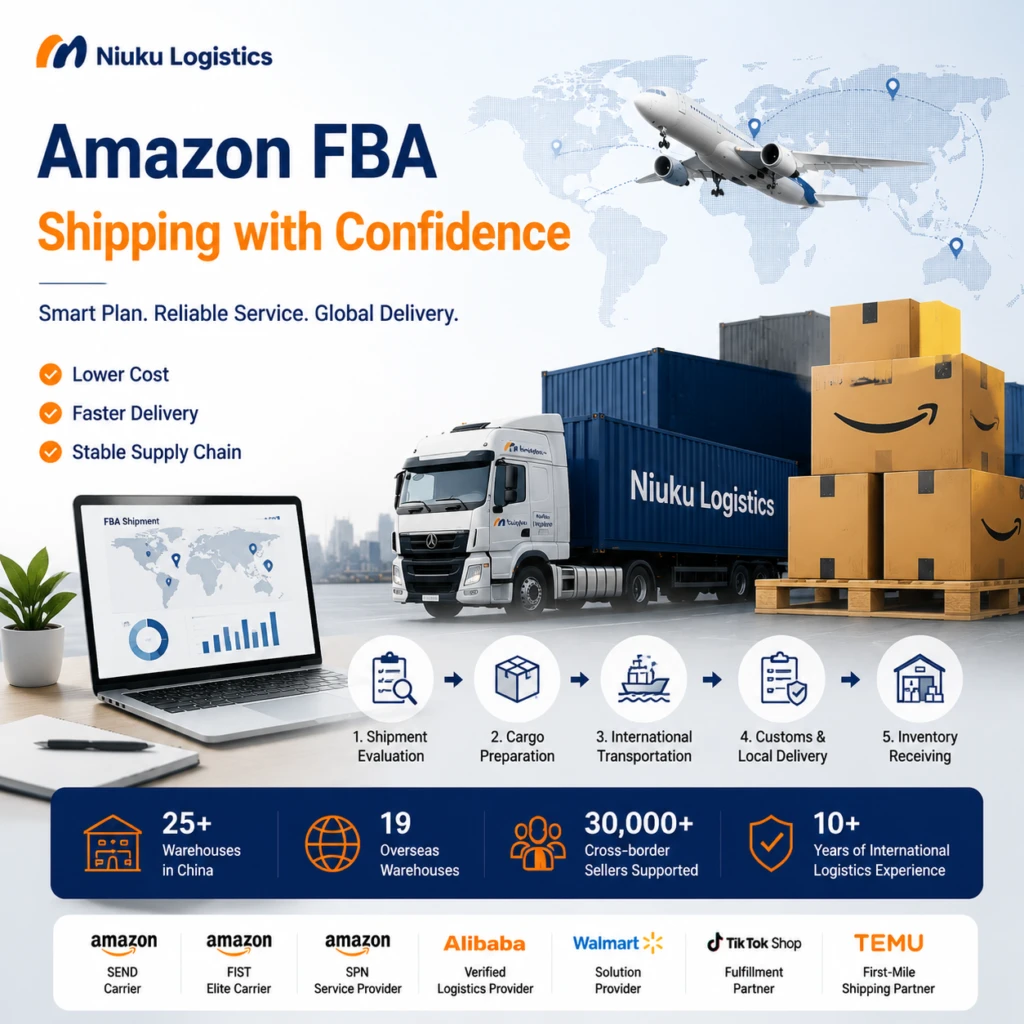
Step 1: Shipment Evaluation
The logistics provider reviews:
- Product category
- Shipment volume
- Package details
- Destination warehouse
- Delivery requirements
Based on this information, the most suitable shipping plan can be recommended.
Step 2: Cargo Preparation
Products are prepared according to transportation and Amazon delivery requirements.
Accurate information helps prevent:
- Documentation errors
- Delivery problems
- Warehouse receiving issues
Step 3: International Transportation
The shipment moves through selected transportation channels based on cost, timing, and inventory needs.
Step 4: Customs and Local Delivery
The shipment completes required customs procedures before being delivered to the Amazon fulfillment center.
Step 5: Inventory Receiving
After Amazon receives and processes the shipment, products become available for customer orders.
Common Amazon FBA Shipping Problems and Solutions
Problem 1: Shipment Delays
Why It Happens:
- Transportation capacity changes
- Documentation issues
- Customs inspections
- Warehouse receiving delays
Solution:
Experienced logistics providers help sellers prepare documents, monitor shipment progress, and adjust transportation plans when necessary.
Problem 2: Unclear Shipping Status
Without proper tracking, sellers may struggle to manage inventory planning.
A digital logistics system provides better shipment visibility and helps sellers make faster decisions.
Problem 3: Choosing the Wrong Shipping Method
Selecting transportation only based on price can create problems.
Professional sellers usually consider:
- Inventory turnover
- Product value
- Sales forecast
- Required delivery date
Why Work With an Experienced Amazon FBA Freight Forwarder?
An experienced Amazon FBA freight forwarder understands the complete logistics process, including transportation coordination, documentation management, customs procedures, and Amazon warehouse requirements.
For example, a seller preparing inventory before a seasonal sales campaign may need a more reliable delivery schedule instead of simply selecting the cheapest transportation option. Professional logistics planning helps reduce stock shortages and improves supply chain stability.
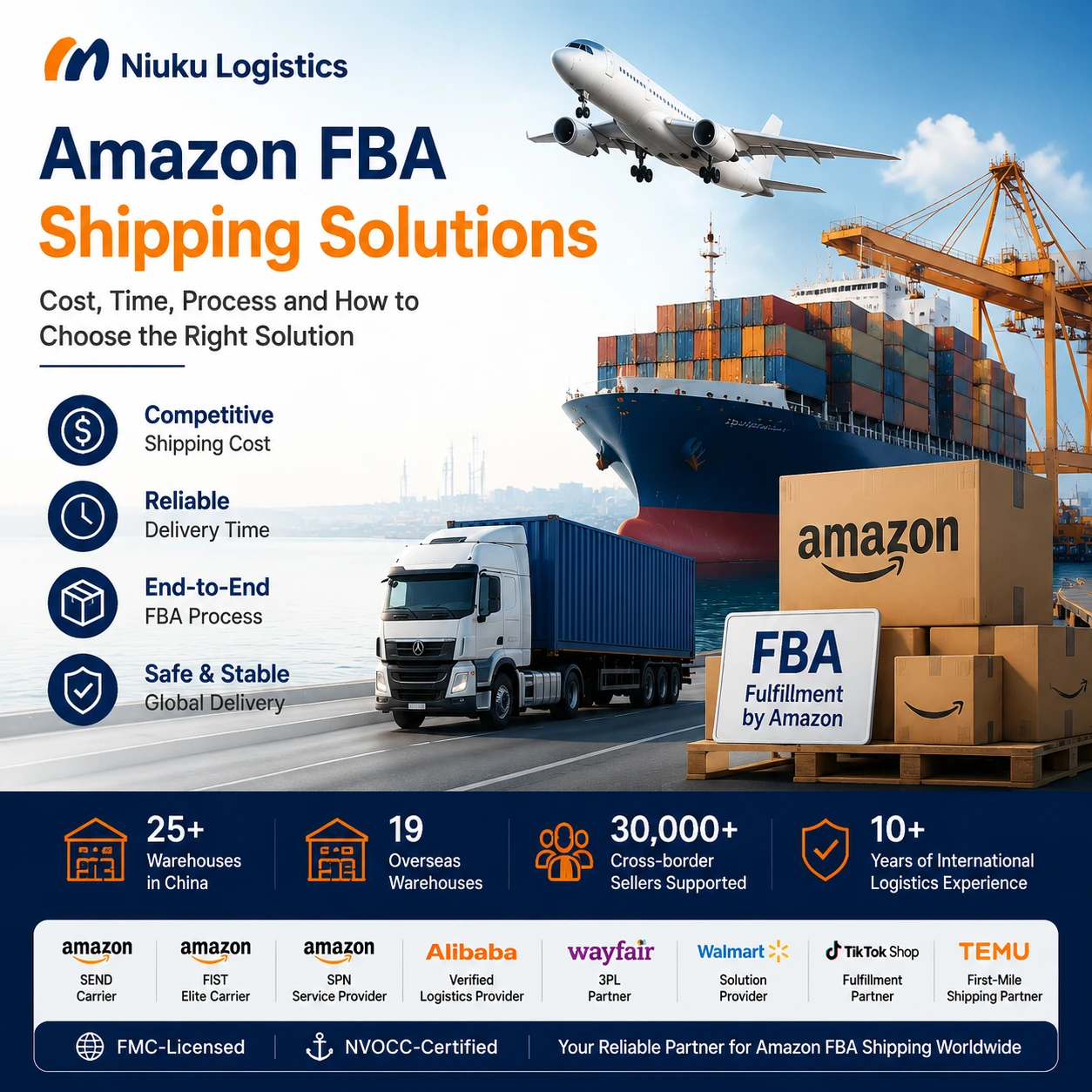
Niuku Logistics has more than 10 years of international logistics experience and has supported over 30,000 cross-border sellers. The company operates 25+ warehouses in China and 19 overseas warehouses, supporting sellers across the USA, Canada, the UK, and Europe.
Niuku provides:
- International ocean and air freight solutions
- Warehouse support
- Digital TMS and WMS shipment tracking
- Customs coordination
- Amazon fulfillment center delivery services
The company is recognized as:
- Amazon SEND Carrier
- Amazon FIST Elite Carrier
- Amazon SPN Service Provider
- Alibaba Verified Logistics Provider
- Wayfair 3PL Partner
- Walmart Solution Provider
- TikTok Shop Fulfillment Partner
- TEMU First-Mile Shipping Partner
Niuku Logistics is also an FMC-licensed and NVOCC-certified logistics provider, supporting international logistics operations with professional compliance standards.
FAQ
1.How can I reduce Amazon FBA shipping costs?
You can reduce costs by planning shipments earlier, selecting suitable transportation methods, optimizing packaging, and choosing a logistics partner with experience in FBA operations.
2.How long does Amazon FBA shipping usually take?
Delivery time depends on transportation method, destination, customs processing, and Amazon warehouse receiving schedules.
3.Can a freight forwarder deliver directly to Amazon fulfillment centers?
Yes. Many FBA logistics providers offer complete shipping solutions, including transportation coordination, customs support, and final delivery to Amazon warehouses.
Conclusion
Successful Amazon selling depends on reliable inventory management and predictable logistics performance. Understanding Amazon FBA shipping costs, delivery timelines, and transportation processes allows sellers to make better supply chain decisions.
With more than 10 years of logistics experience, Amazon FBA shipping expertise, 25+ warehouses in China, and 19 overseas warehouses, Niuku Logistics supports global sellers with flexible logistics solutions across major marketplaces.
Get Your Free Amazon FBA Shipping Assessment
Share your product category, shipment volume, destination marketplace, and delivery requirements. Niuku Logistics will evaluate your logistics needs and recommend a suitable Amazon FBA shipping solution based on your inventory goals and delivery expectations.